The Water Remembers: Inside America's Quiet Romance With Turkish Ebru
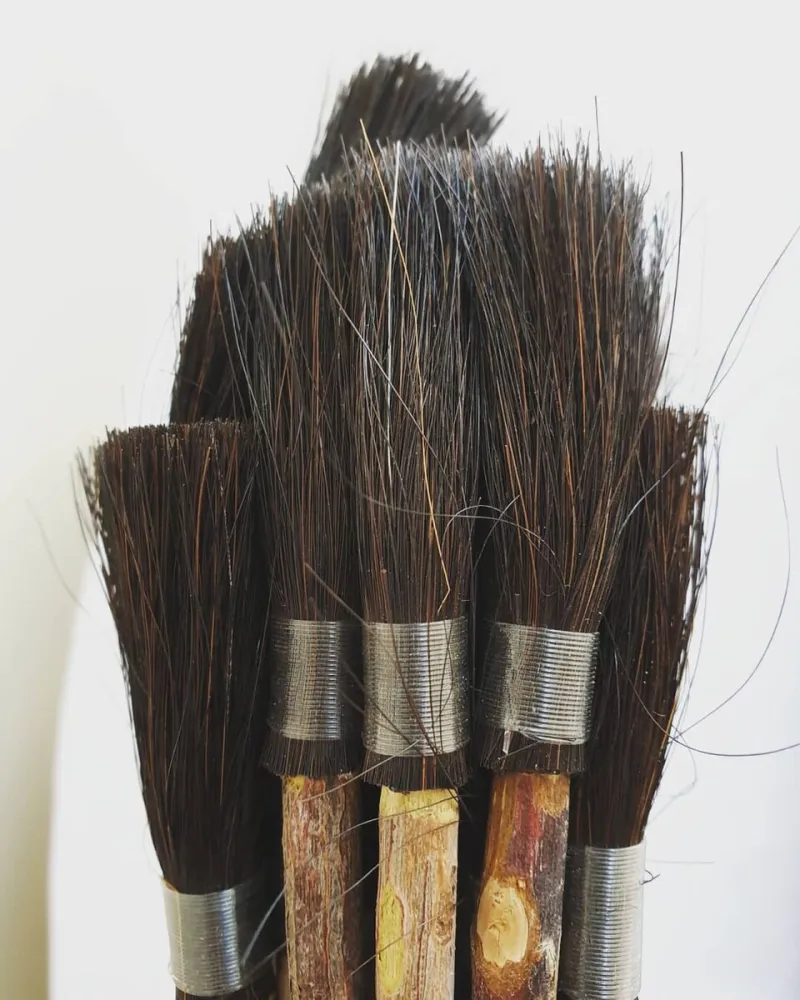
Photo: Widad.sirkhotte, CC BY-SA 4.0, via Wikimedia Commons
In a converted warehouse studio in Portland, Oregon, a dozen adults stand in silence around shallow trays of viscous water. Each holds a brush of horsehair and rosewood, loaded with pigment ground to the consistency of cream. When the brush touches the surface, the color does not sink. It blooms — a disc of ultramarine spreading outward like a small galaxy. One participant, a software designer who asked to be identified only by her first name, Deniz, exhales audibly. "I haven't looked at my phone in two hours," she says. "I didn't want to."
She is practicing ebru, the Turkish art of paper marbling, and she is far from alone in her fascination.
A Craft That Refuses to Repeat Itself
Ebru's mechanics are deceptively simple. Pigments — historically mixed with ox gall and water — are floated on a bath thickened with carrageenan, a seaweed-derived extract. The artist combs, fans, and drags the floating colors into patterns: the spiral bülbül yuvası (nightingale's nest), the feathered hatip, the stone-and-vein tarakli. A sheet of paper, treated with alum, is laid gently onto the surface. When it is lifted, the design has transferred completely. The tray is wiped clean. Nothing survives of the composition except the print.
That finality is precisely the point, and precisely the appeal. In an era when every digital artifact can be duplicated, edited, and reverted, ebru offers an object that cannot be remade. American art schools from the Rhode Island School of Design to smaller community programs in Santa Fe and Asheville have added marbling workshops to their continuing-education catalogs, and most fill within days.
"People arrive expecting a craft class," says one Istanbul-trained instructor who now teaches in Massachusetts. "They leave having had a conversation with water."
The Istanbul Pilgrimage
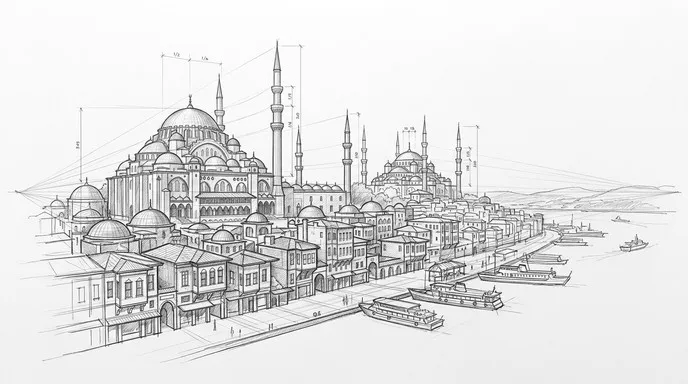
For a growing number of American artists, the journey leads eventually to Istanbul, where ebru remains a living lineage rather than a revival. Workshops in the historic quarters near the Grand Bazaar and in Beykoz teach under the usta–çırak system — master and apprentice — in which technique is transmitted through years of observation rather than written instruction.
Visitors from the United States, many of them graphic designers and illustrators seeking relief from vector-based work, spend weeks learning to control a breath's worth of movement. The curriculum is unforgiving in its simplicity: how to hold the brush, how to scatter pigment in even droplets, how to pull a comb through color without trembling. There are no shortcuts, and the masters are candid about saying so.
Some of these students return home to open studios of their own; others sell marbled papers, journals, and textiles through online storefronts, where a single hand-marbled sheet can command prices that mass-produced wallpaper never could. The American appetite, it turns out, extends beyond the workshop table.
From Sufi Lodge to Corporate Off-Site
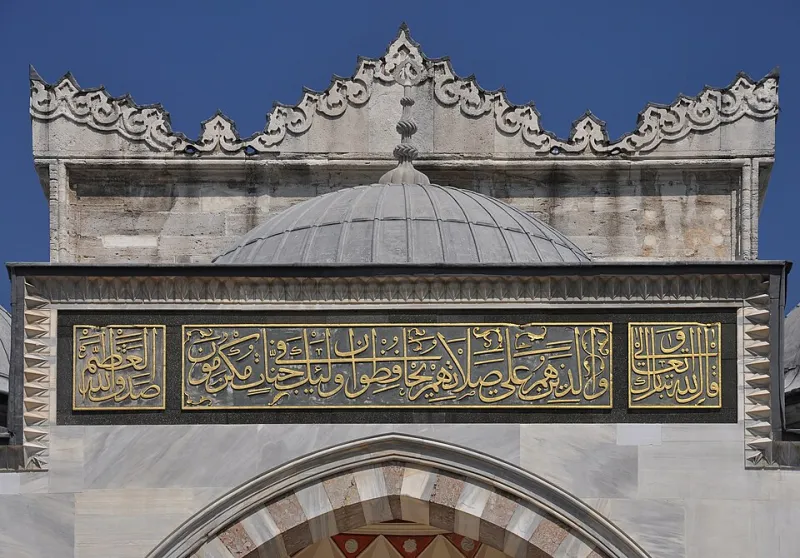
Yet the tradition's migration has not been without friction. Ebru has long carried a spiritual dimension: it flourished in the Ottoman world alongside calligraphy, used as ground material for sacred texts and devotional panels, and many practitioners describe the act of marbling in meditative, even contemplative terms.
In its American incarnation, that dimension is often repackaged. Corporate wellness programs now advertise marbling sessions alongside sound baths and breathwork. Retreat centers in California and upstate New York offer "mindful marbling" weekends. The vocabulary has shifted from hal (spiritual state) to "flow state," from discipline to self-care.
Critics of this translation raise a fair question: does something essential dissolve when a devotional craft is marketed as stress relief? The historian's answer is usually more generous. Traditions have always traveled by changing clothes. Japanese tea culture reached America partly through lifestyle magazines before it reached the seminar room; yoga made a similar journey decades earlier. What survives the crossing is rarely identical to what departed — but it is not nothing.
What the wellness framing risks flattening, however, is ebru's rigor. The meditative quality of the practice is earned through repetition and failure, not ambient candlelight. Marbling punishes impatience: pigment that is too thin sinks, water that is too thick resists the comb, a heavy hand destroys in seconds what took minutes to compose.
The Case for Slowness
Perhaps the most persuasive argument for ebru's American moment is not spiritual but material. A generation raised on frictionless interfaces has developed an appetite for processes that push back — sourdough fermentation, hand-thrown ceramics, letterpress printing. Marbling belongs to this family of slow techniques, but with a twist: it requires the practitioner to surrender a degree of control that most crafts never ask for. The water has opinions. The pigment drifts where the air currents in the room send it.
Artists describe this as the practice's central lesson, whether or not they frame it in Sufi terms. You prepare everything you can prepare, and then you accept what the surface gives you. The result is a finished sheet that is simultaneously a record of skill and a record of accident.
In Istanbul's workshops, students are often told that the marbler does not paint on the water; the water permits the marbler to paint. It is a formulation that would not be out of place in a design studio in Austin or a night class in Chicago — and, increasingly, it is one that Americans are hearing, one tray at a time.