Measuring Light: The American Studio Pilgrimage Back to Sinan's Istanbul
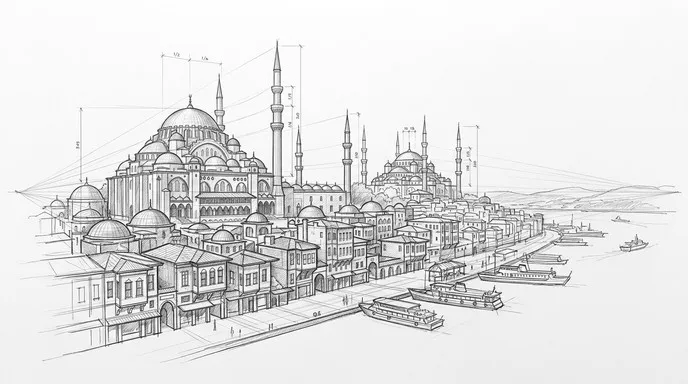
Photo: architecture students sketching Ottoman mosque courtyard Istanbul, via images.stockcake.com
The sketchbook belongs to a fourth-year student from a Midwest land-grant university, and for two weeks it has recorded nothing but thresholds. Doorways, arcades, the seam where a courtyard ends and a prayer hall begins. Her classmates from Chicago, Portland, and Houston are doing the same, spread across the terraces of a sixteenth-century complex, drawing by hand because their professor has confiscated the laptops — a rule announced half in jest, enforced entirely in earnest.
They are part of a small but noticeable migration: American architecture students and young practitioners returning to Istanbul, not for the skyline of Levent or the spectacle of the Bosphorus, but for the spatial logic underneath it. What they are studying, in the language of their studios, is light, courtyard, threshold — the grammar of Ottoman building that no rendering engine has yet convincingly imitated.
The Rebellion Against the Same Building Everywhere
It is easy to forget, walking through any American downtown, how narrow the contemporary palette has become. Curtain wall, spandrel, lobby, repeat. The critic Reinier de Graaf once described global development as architecture's answer to the chain restaurant: identical product, guaranteed performance, no surprises. Students feel this acuity before they can articulate it. Many arrive in Istanbul having never seen a building that changes character with the hour.
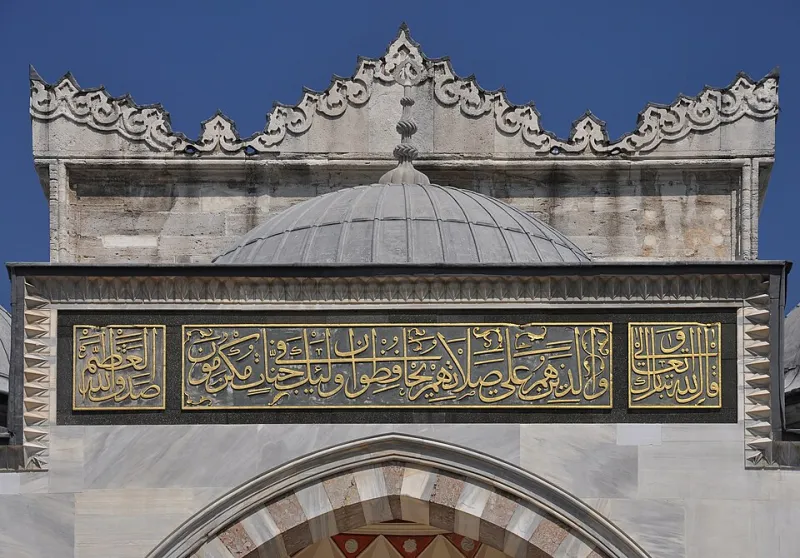
That is precisely what the Ottoman corpus offers. The domes of the Süleymaniye or the smaller mosques of Üsküdar do not merely enclose space; they choreograph it. Light enters through pierced drums and stained glass in measured doses, so that the interior seems to breathe across the day. The courtyard mediates between street and sanctuary, performing a civic function — shade, conversation, children at play — that no American plaza of pavers and bollards quite manages.
"I spent three years learning to model anything," one graduate student from a Boston program says, laughing. "Then I sat in a mosque for an hour and realized I couldn't explain why the room felt generous. That's the education I actually needed."
Drawing as Argument
The sketchbook requirement is not nostalgia. Several visiting faculty — American academics with appointments in Istanbul for the summer — treat freehand drawing as a method of critique. To draw Sinan's plan is to discover that its geometry is not the rigid symmetry a floor plan suggests but a sequence of adjustments: buttresses absorbed into the mass, galleries shifted to catch the qibla wall's light, a dome that appears effortless only because every compromise has been hidden.
This is the lesson the students carry home. Not domes — few American programs will ever build one — but the discipline of concealment, the idea that a building's intelligence can reside in what it absorbs rather than what it displays. Compare that to the current American fashion for exposing structure as branding, and the contrast becomes a quiet polemic.
The timing is not accidental. As American cities confront loneliness, heat islands, and the failure of the single-use tower to produce community, architects are searching for precedents outside the modernist canon. The Ottoman complex — mosque, soup kitchen, school, bath, caravanserai gathered around shared courts — reads today as a manual for mixed-use programming that zoning boards are only now learning to permit.
From Terrace to Zoning Meeting
The pilgrimage does not end at departures. In Austin, a young firm has begun designing neighborhood pavilions around shaded courts, citing the multi-function courtyards they sketched in Fatih. In Philadelphia, a public library renovation borrowed the Ottoman device of the sofa — the intermediate gallery between exterior and interior — to soften the threshold for residents who distrust civic buildings. These are modest interventions, unglamorous in plan review, but they mark a shift: the American public space conversation, long dominated by Scandinavian models and New Urbanist pastiche, has acquired a new reference point.
The students themselves describe the change in personal terms. One, bound for a job at a large corporate practice, says she now measures every brief against a question she learned on a Üsküdar terrace: who does this building feed, shelter, or gather besides the person who paid for it? It is a question with five centuries behind it, and one that no glass tower, however elegant, has yet learned to answer.
Istanbul, meanwhile, continues to teach without advertising. The domes do not explain themselves. They simply wait for the next sketchbook to arrive.