The Grammar of the Greeting: What Turkish Courtesy Is Teaching American Workplaces

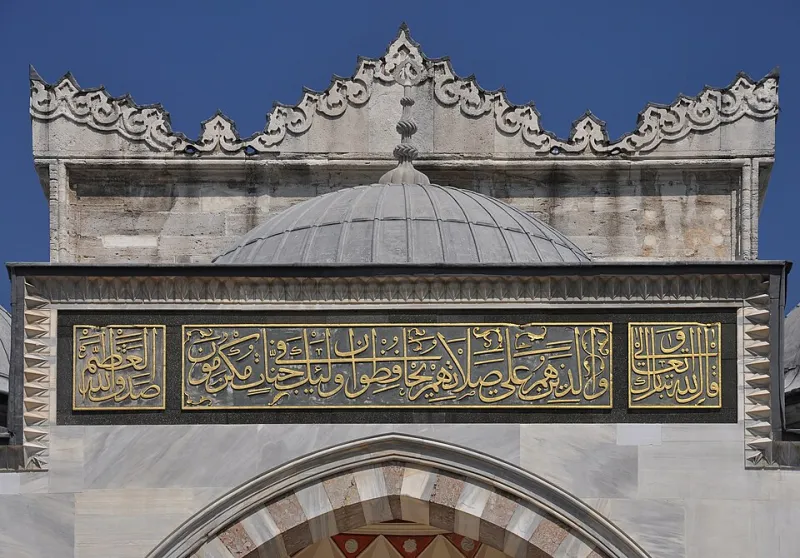
Photo: Editor5807, CC BY 3.0, via Wikimedia Commons
In a co-working space in downtown Portland, a product manager begins her morning video calls with a small nod of the head and a hand pressed briefly to her chest. She learned it from a Turkish colleague three years ago. She could not explain, if pressed, exactly why it feels different from a wave — only that it does.
Across the United States, a quiet migration of manners is underway. Turkish forms of greeting and social rhythm — the subtle selam, the unhurried exchange of pleasantries before business, the physical vocabulary of respect — are appearing in American workplaces, wellness studios, and etiquette newsletters. Not as explicit instruction, but as observation. Americans are watching how Turks greet, and they are borrowing.
The Gesture That Refuses Translation
The selam itself is deceptively simple: a greeting that can be a word, a nod, a hand to the heart, or all three at once. In Turkey, it carries a grammar. The depth of the nod, the timing of the hand, the order in which elders are acknowledged — none of it is written down, and all of it is read.
American etiquette, by contrast, has long preferred codification. Emily Post gave us rules; LinkedIn gave us scripts. But the Turkish gestures now circulating through American professional life resist the manual. A hand-over-heart greeting performed mechanically reads as hollow, even mocking. Performed with the slight pause it demands — a beat of acknowledgment before the gesture — it reads as sincerity.
"The mistake Americans make is treating it as a move," says one intercultural trainer in Chicago who works with teams spanning Istanbul and the Midwest. "It's not a move. It's a tempo."
Tempo, Not Technique
That tempo may be the real export. Turkish social custom allocates time to greeting in a way that American efficiency culture finds almost transgressive. Coffee is not grabbed; it is sat with. The question "How are you?" is not rhetorical. In Anatolian tradition, the guest arrives slowly and leaves slowly — the arrival and departure are themselves rituals, as meaningful as the visit.
Wellness spaces were the first to notice. Sufi-influenced retreat centers in upstate New York and California began modeling their openings on the Turkish instinct for unhurried welcome: tea before talk, silence before speech. From there the habit leaked into corporate retreats and, eventually, into the mundane architecture of the workday.
The results are mixed. A slight bow on a Zoom call lands well; the same bow in a New York elevator can read as theatrical. The American workplace has an acute sensitivity to borrowed solemnity — it wants the warmth of ritual without the obligation of it.
What the Borrowing Reveals
It is tempting to file this under exoticism, but the more honest reading is hunger. American social life has spent a decade optimizing contact down to its minimum: the wave emoji, the thumbs-up reaction, the drive-by "circling back." Against that backdrop, a greeting that costs something — a pause, a gesture, a genuine question about one's family — feels less like foreign etiquette and more like recovered infrastructure.
Turkish culture is not unique in this, of course. Japanese bowing, Arab greetings, the French bise — all have their American admirers. But the Turkish version arrives with particular appeal for a specific reason: it is legible. The hand to the heart requires no fluency, no theology, no explanation. It is a gesture that means exactly what it appears to mean, which in an age of ironic communication is a rare commodity.
The Limits of Borrowing
Not everything crosses. The Turkish insistence on greeting everyone individually upon entering a room — the office, the gathering, the shared minibus — has proven nearly impossible to transplant. American social anxiety treats it as a gauntlet rather than a courtesy. Likewise, the elaborate refusal-and-insistence dance around offers of food and payment (the ritual of resistance known as inat-related hospitality sparring) tends to collapse into awkwardness when performed by Americans raised on "sure, thanks."
What survives translation is the smaller vocabulary: the pause before the meeting starts, the acknowledgment of the room, the willingness to let a greeting take ten seconds instead of two. These are modest imports. But modest imports, multiplied across thousands of workplaces, add up to something.
Perhaps that is the real story. Cultures have always traded in objects — spices, textiles, films. The trade in gestures is quieter, and harder to tariff. Somewhere in a Denver conference room, someone is greeting a colleague with a little more care than they would have five years ago, and cannot quite say where the habit came from. The selam, in the end, does not need a passport. It needs only to be noticed.