Courtyards, Fountains, and the Architecture of Belonging: What American Cities Are Learning From the Süleymaniye
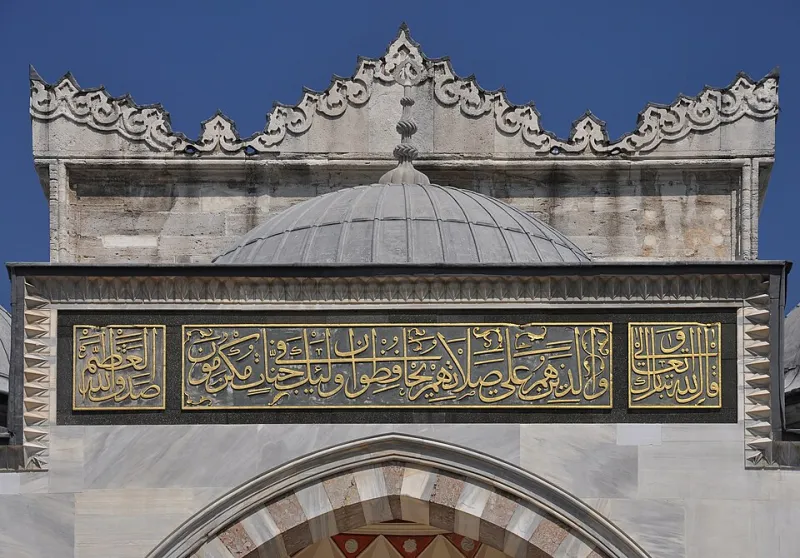
Photo: Moonik, CC BY-SA 3.0, via Wikimedia Commons
On a bright April morning in Istanbul, a small delegation of American architects stood in the courtyard of the Süleymaniye Mosque, sketchbooks open, phones tucked away. They were not there for the dome, however magnificent. They were there for the courtyard itself — the shaded arcade, the central fountain, the way strangers shared space without ceremony. One of them, a principal at a mid-sized firm in Portland, put it plainly: 'We've been trying to design third places for twenty years. This place had them figured out in 1557.'
The Külliye, America's Unlikely Planning Manual
The Ottoman mosque was never just a mosque. The külliye — the institutional complex built around it — bundled a soup kitchen, a bathhouse, a school, a library, and a fountain into a single composition, all oriented toward public life. The mosque anchored the neighborhood; everything else radiated outward, free and open to everyone regardless of faith.
American architects confronting the loneliness epidemic, dying downtowns, and parking-scarred suburbs have begun to see this as more than historical trivia. The külliye was, in effect, a mixed-use civic campus delivered by a single patron with a single vision — a model that resonates in an era when American civic buildings are either privatized, fortified, or simply absent.
Water as Public Infrastructure
Consider the fountain. In Ottoman Istanbul, the çeşme was not decorative; it was democratic infrastructure, a free source of water placed at street corners and courtyard edges, often with a bench built in so the act of drinking became an act of lingering. A few American landscape designers have taken note. In Phoenix and Sacramento, where heat increasingly shapes public life, firms are experimenting with water features that actually do something — cooling shaded gathering points rather than ornamental jets in a plaza nobody uses.
The difference is philosophical. The American plaza tends to be an empty stage awaiting an event. The Ottoman courtyard was a room without a ceiling, furnished with light, water, and shade, useful every single day.
Light, Filtered and Earned
The other quiet lesson is environmental. Ottoman master builders achieved remarkable interior comfort without glass curtains or mechanical systems. Mimar Sinan's mosques manage temperature through mass, geometry, and — most relevant to contemporary practice — light-filtering screens that admit illumination while rejecting heat.
Several US firms working on net-zero civic buildings have revisited the müşebbek, the pierced lattice screen found throughout Ottoman architecture, as a precedent for today's perforated metal shading systems. The logic is identical: daylight without solar gain, ventilation without exposure. What was carved in stone by hand now comes off a CNC router, but the principle survived the five-hundred-year crossing intact.
What a Sixteenth-Century Complex Knows That Zoning Forgot
The most pointed critique embedded in this transatlantic study is about governance. The Süleymaniye worked because it was conceived as a whole — worship, education, feeding, and bathing integrated into one architectural and social program. American urban planning, governed by single-use zoning and parcel-by-parcel development, has largely lost the ability to compose civic space as a coherent whole.
Some practitioners see the külliye as an argument for what planners call 'civic anchors' — a library, a clinic, a public bath or pool, and open gathering space arranged around a shared court. The analogy is imperfect, and no one is proposing domes over Denver. But the underlying wager holds: proximity builds community, and architecture that assumes strangers will share a courtyard will produce different behavior than architecture that assumes everyone is passing through.
A Quiet Exchange
None of this has produced a manifesto. There is no book, no conference, no branded movement — only site visits, sketchbooks, and a growing citation trail in academic journals of landscape history. That quietness may be the point. The Ottoman complex offers American designers something rare: a fully realized alternative to both the fortified private enclave and the atomized public square, built by a civilization that treated generosity of space as a form of statecraft.
Standing in the Süleymaniye's forecourt, the Portland architect offered a final observation. 'We keep asking how to get people to use public space. They asked how to make public space worth using.' It is a question American cities, five centuries later, are only beginning to ask in return.