Handmade From Gaziantep, Shipped to Greenpoint: The New Economics of Anatolian Craft
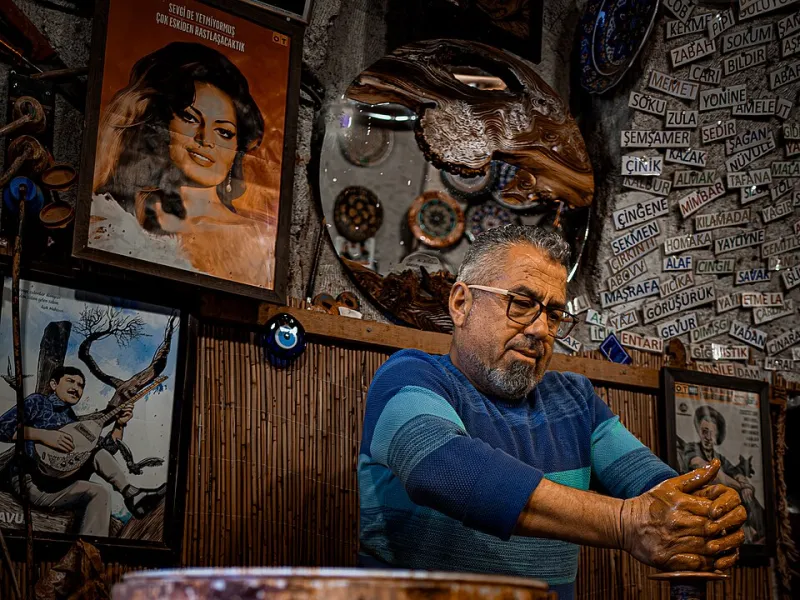
Photo: Ilkrdncr, CC BY-SA 4.0, via Wikimedia Commons
The Tile That Crossed an Ocean Twice
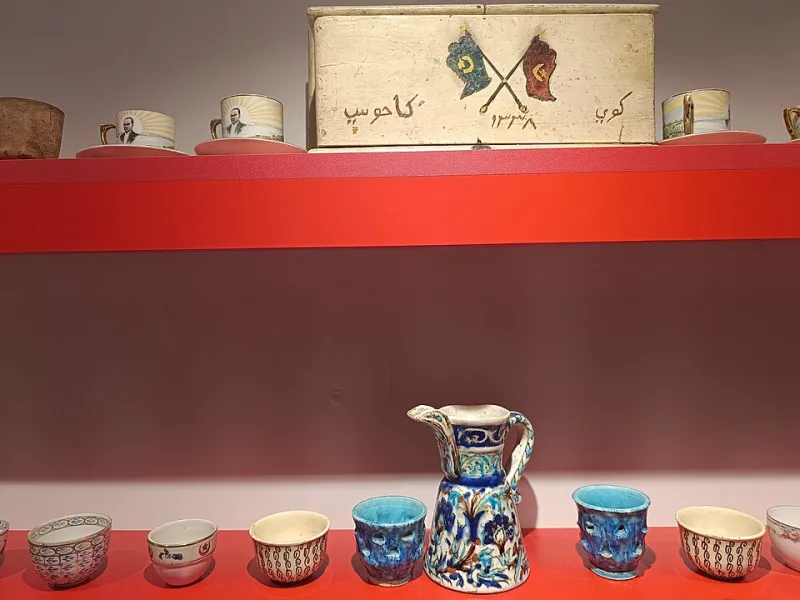
The Iznik plate that now hangs in a brownstone in Clinton Hill began, like most of its kind, as a drawing on paper in a workshop outside Bursa. It passed through a kiln twice — once for the body, once for the glaze — and then, some weeks later, passed through a customs inspection in New Jersey. Its buyer, a graphic designer who had never visited Turkey, discovered the maker through a fifteen-second video of a brush filling in a tulip motif in cobalt and coral.
This is the new trade route: not the caravan roads of the Ottoman Empire but the algorithmic corridors of Instagram and Etsy. And it is carrying more than souvenirs. American collectors are now paying serious, gallery-level prices for contemporary Anatolian craft — hand-knotted rugs, calligraphic panels, copperwork hammered in Gaziantep — and the artisans producing them are building businesses their grandparents could not have imagined.
The Makers
Consider a few representative figures in a growing diaspora of makers. A ceramicist in Kütahya, trained by her father in the town's four-century tile tradition, now counts Los Angeles interior designers among her wholesale accounts. A calligrapher in Istanbul, whose tezhip-bordered pieces once sold mainly to visiting tourists, ships framed work to collectors in Chicago who found him through a process video captioned in English. In southeastern Anatolia, weaving cooperatives that struggled for decades against machine-made imitations now maintain waiting lists, their kilims photographed on the polished concrete floors of apartments in Portland and Austin.
What unites them is not style but method: the digital storefront as a direct line from workshop to living room, eliminating the layers of import houses and showroom markups that once stood between an Anatolian weaver and an American buyer.
Why Americans Are Buying
The American appetite for these objects is part aesthetics, part ethics. A hand-knotted rug from Anatolia can take a weaver six months; a machine-made lookalike takes a factory an afternoon. In an era of fast furniture and disposable décor, that difference in labor has become a selling point rather than an inconvenience. Collectors speak of 'provenance' and 'patina' — vocabulary borrowed from the art world and applied to objects that, until recently, were categorized as ethnic handicraft.
There is also the matter of taste. The flatweave kilim, with its geometric boldness, has spent a decade as the unofficial rug of American mid-century revival interiors. Iznik's tulips and saz leaves, meanwhile, have found a second life in the maximalist reaction against beige minimalism: kitchens in Queens and Nashville now sport backsplashes that would not look out of place in Topkapı.
The Frictions of the Digital Bazaar
The model is not without strain. Shipping a fragile, kiln-fired plate across the Atlantic invites breakage and customs delays; a returned rug can cost a maker more than its margin. Copycats proliferate — machine-printed 'Iznik-style' textiles manufactured far from Bursa undercut authentic work on the same platforms, forcing artisans to become their own authenticators, posting videos of their brushes and looms as proof of process.
There is a subtler tension, too. The platforms reward volume and novelty, while craft traditions prize repetition and patience. Artisans describe the strange rhythm of their days: three hours at the wheel, an hour photographing it, an hour answering American direct messages at midnight Istanbul time. The Grand Bazaar, whatever its theatricality, never demanded that its merchants be their own cinematographers.
Survival, Not Nostalgia
It is tempting to frame this as a story of ancient crafts rescued by modern technology, but the reality is more reciprocal. The technology did not save these traditions; the traditions made the technology worth watching. American buyers did not discover Anatolian craft because it appeared on their feeds — they stayed because the work, seen up close in those process videos, revealed a depth that mass production cannot fake.
What the digital bazaar has done is collapse the distance between maker and market. The weaver in Gaziantep knows what her Portland buyer's living room looks like; the collector in Greenpoint knows the name of the man who knotted his rug. In the long history of trade between Anatolia and America — mostly a history of intermediaries — that may be the genuinely novel thing. The caravan route has been replaced by a conversation, and both ends of it, for now, seem satisfied with the exchange.