Beyond the Kebab: How Anatolia's Forgotten Pantry Became America's Most Serious Kitchen Obsession
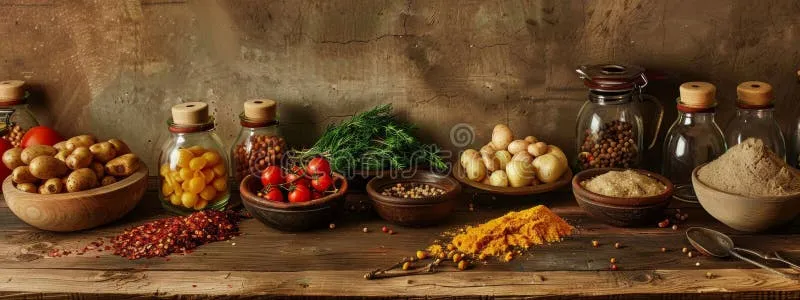
Photo: Anatolian heirloom grains and spices on rustic table Turkish ingredients, via thumbs.dreamstime.com
In the tasting kitchens of New York, Los Angeles, and Chicago, a quiet reckoning is underway. The Turkish restaurant that Americans thought they knew — the doner shop, the late-night kebab joint — is being joined by something more deliberate: a cuisine studied at the level of terroir, seasonality, and technique. Anatolia, it turns out, was never a monolith. It was a pantry that the American food world had barely opened.
From Novelty to Vocabulary
For decades, Turkish flavors appeared on American menus as garnish — a smear of muhammara here, a nod to 'Mediterranean spice' there. The framing was familiar and, frankly, condescending: Turkish food as exotica, a detour rather than a destination. What has changed is not the food but the posture of the cooks approaching it.
Chefs who once spoke the language of 'fusion' now speak of the Black Sea's cornbread traditions, of Gaziantep's pistachio orchards, of the difference between a pepper dried in the Aegean sun and one dried industrially. This shift mirrors the path taken by regional Italian and Oaxacan cuisines in the US: first novelty, then fashion, and finally — the hardest stage — serious culinary study.
The Grain Question
Perhaps the most telling development is the arrival of Anatolian grains on American farms and American plates. Kavilca wheat, siyez (einkorn) cultivated in the Kastamonu highlands for millennia — these are not marketing hooks but agrarian heirlooms, and they appeal to exactly the instincts that drove the American heirloom-grain movement of the last fifteen years.
Bakers and chefs who built their reputations on heritage wheat from the Pacific Northwest are now sourcing siyez flour for breads and pilafs, discovering a flavor profile that is nuttier, wilder, and older than anything in the standard American larder. The parallel is precise: what Anatolia offers is not novelty but depth — a continuous agricultural memory that American food culture, obsessed with provenance, cannot resist.
Sweets, Reconsidered
Even the most familiar Turkish import, lokum — sold in American boutiques for years as 'Turkish delight' — is being reexamined. Pastry chefs are treating Ottoman confectionery not as a gift-shop item but as a technical tradition: grape molasses, salep, mastic, and rosewater deployed with the same rigor once reserved for French patisserie.
In a Brooklyn café, you might find a salep-based ice cream beside a single-origin espresso. In San Francisco, a dessert menu might trace a line from Byzantine honey production to modern Antep baklava. The point is not nostalgia; it is literacy. American diners are being taught, one plate at a time, that Anatolian sweets carry a history as layered as the city where much of it was codified.
Why This Moment, Why Now
Three forces converged. First, the travel boom: Americans who visited Istanbul, Cappadocia, or the Aegean coast returned with appetites and questions. Second, the diaspora: a generation of Turkish-American cooks with fine-dining training and no interest in diluting their heritage for the market. Third, the American palate itself, which after years of Middle Eastern and Levantine influence was ready to distinguish Turkish cuisine from its neighbors — to see it as a distinct civilization of flavor, not a footnote.
The Risk of the Frame
There is, of course, a danger: that 'Anatolian' becomes the next word flattened by menus, stripped of meaning the way 'artisanal' once was. The chefs doing this work best resist that by naming places, farmers, and techniques — by insisting that a pepper from Urfa is not a pepper from Maraş, and that the difference matters.
That insistence is what separates cuisine from trend. Anatolia's pantry did not need rescuing; it needed readers. American kitchens, at their most curious, have finally learned the language in which it was written.