Copper Pots and Cold Brew: The Quiet Takeover of Turkish Coffee Culture in America
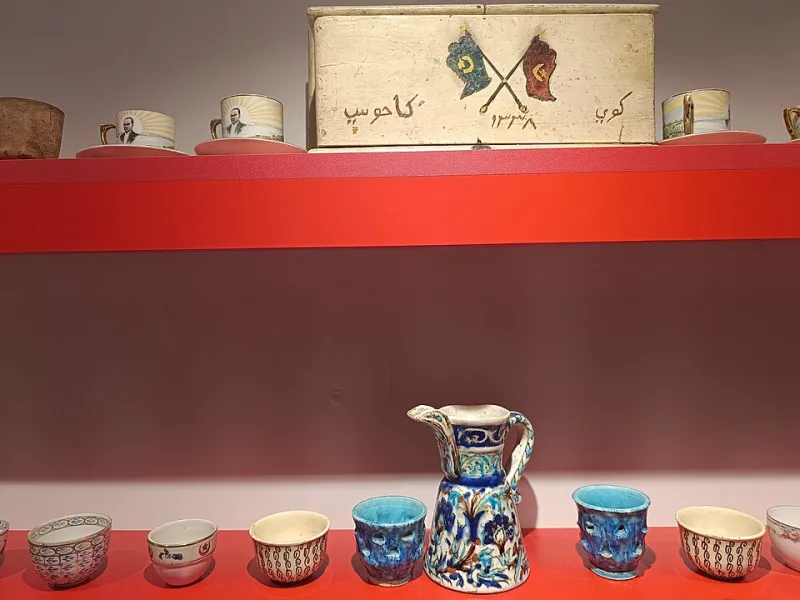
Photo: Julvsel, CC BY-SA 4.0, via Wikimedia Commons
Walk down a certain stretch of Knickerbocker Avenue in Bushwick on a Saturday morning and you may notice something incongruous: a line of tattooed twenty-somethings waiting outside a café whose chalkboard promises, alongside the obligatory oat-milk cortado, Türk kahvesi — served in the traditional way, unfiltered, in a cup the size of an espresso demitasse, with a square of Turkish delight balanced on the saucer.
A decade ago, the scene would have been implausible. Today it is a trend with legs, one that has carried a five-hundred-year-old brewing ritual from Istanbul's back streets into the most self-conscious coffee corners of New York, Los Angeles, Chicago, and Portland.
An Old Ritual Meets a New Obsession
Turkish coffee is, by any measure, the world's most patient preparation. Finely ground beans — powdered, really — are simmered with water and, traditionally, sugar in a small copper pot called a cezve, then poured unfiltered into a small cup. The grounds settle; the foam, köpük, is the mark of a skilled hand. UNESCO recognized the tradition as intangible cultural heritage in 2013, a bureaucratic acknowledgment of what every Turkish grandmother already knew.
What explains its sudden American appeal? The answer lies partly in the third-wave coffee movement's own logic. Specialty cafés spent two decades teaching American drinkers that brewing method matters, that origin stories matter, that ritual matters. Turkish coffee is, in a sense, the ultimate origin story — a preparation older than espresso by centuries, with a ceremony attached. For baristas seeking authenticity beyond the flat white monoculture, the cezve offered exactly that.
"Our customers see it as theater," says Deniz Aydın, who opened a café in Williamsburg with her family after years in the city's restaurant trade. "The copper pot over the flame, the foam rising — people film it. In Istanbul it's just coffee. Here it's a performance."
The Diaspora Entrepreneurs
The trend's most interesting architects are not the cafés themselves but the suppliers behind them. A small network of Turkish-American roasters and importers now serves American cafés seeking properly ground beans — a finer grind than espresso, achieved on specialized mills. Simit bakers, meanwhile, have quietly expanded from diaspora neighborhoods like Sunnyside and Clifton into wholesale arrangements with non-Turkish cafés, sesame-crusted rings appearing in pastry cases from Boston to Austin.
This is a familiar American pattern: immigrant communities preserve a tradition, and the broader culture eventually discovers it as novelty. What differs here is the speed, and the medium. Turkish coffee did not arrive through a single celebrity endorsement or a viral moment. It accumulated — through diaspora cafés, through travel, through the slow prestige of Istanbul as a destination city for the same cosmopolitan millennials who populate specialty coffee shops.
What Is Lost, What Is Gained
Purists, predictably, have notes. Traditionalists observe that the American version sometimes softens the drink's essential character — sweetened by default in Turkey according to the drinker's order, it is often served here as a bitter curiosity, an experience to be sampled rather than inhabited. The fortune-telling ritual, in which the drained cup is overturned onto its saucer and the grounds' patterns read, is frequently reduced to a decorative gesture, stripped of its social function: in Turkey, the reading is conversation, an excuse to linger.
And lingering, it must be said, is the real export. American café culture has long been criticized as transactional — order, pay, depart with a paper cup. The Turkish coffeehouse tradition, by contrast, is built around staying. The cup is small precisely because it is not the point. The point is the hour of talk that accompanies it.
It would be easy to be cynical about all of this — to see in Brooklyn's cezve merely the latest appropriation in a long line, from matcha to cortado. But the record of American food culture suggests something more generative happens: the borrowed ritual takes root, mutates, and eventually produces something local. Turkish coffee in America will not be identical to Turkish coffee in Kadıköy. It will be its own thing — a hybrid, as all living traditions are.
For now, though, there is pleasure simply in the image: a copper pot on a Brooklyn flame, foam rising, a centuries-old ritual patiently teaching a hurried city the art of the small cup and the long conversation.