When Hüzün Refuses to Cross the Bosphorus: Inside the Quiet Battles Over Turkish Words in English
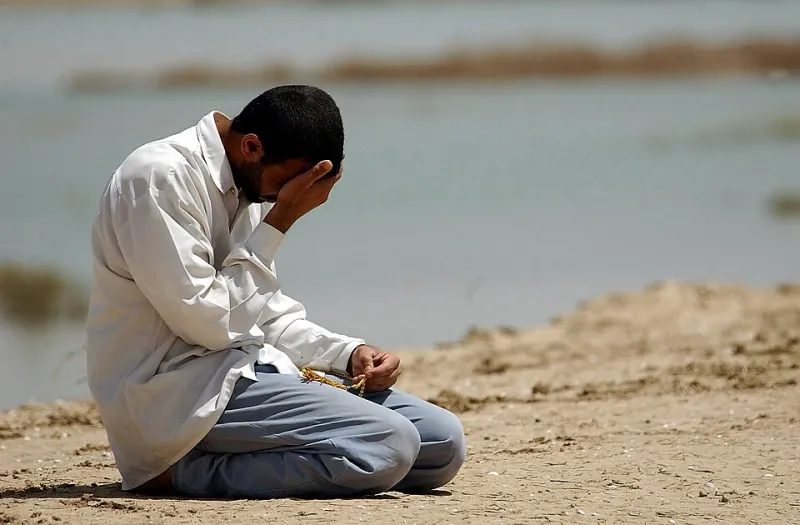
Photo: Department of Defense. American Forces Information Service. Defense Visual Information Center. 1994, Public domain, via Wikimedia Commons
Somewhere in a Brooklyn apartment, a translator is staring at the word hüzün for the fourth hour in a row. It is not melancholy, exactly. It is not sadness, not quite. The Turkish word carries centuries of Islamic mysticism, Ottoman poetry, and a specifically communal form of grief that English — a language rich in almost everything else — simply does not stock on its shelves.
What she decides in the next hour will quietly shape how thousands of American readers imagine an entire country.
The Invisible Hand Behind Every Turkish Novel
American readers have fallen, gently and steadily, for Turkish fiction. Orhan Pamuk's Nobel medal opened the door; Maureen Freely's supple translations of Snow and The Museum of Innocence walked American book clubs through it. But the version of Turkey arriving in US bookstores is not Turkey. It is a decision — thousands of them, made by translators, argued over with editors at Knopf, Farrar, Straus and Giroux, and the smaller independent houses that have become the genre's true champions.
Translation scholars call it the translational turn; translators themselves call it the job. The labor is invisible by design. A good translation, the saying goes, reads as if it were never translated at all. But for Turkish, a language whose grammar builds emotion into its suffixes and whose vocabulary carries the residue of empire, the demand for invisibility comes at a cost.
Three Words That Start Arguments
Ask working translators which Turkish words give them nightmares and a shortlist emerges with remarkable consistency.
Hüzün — Pamuk made it famous in Istanbul, framing it as a collective, Sufi-inflected melancholy. Some translators keep the Turkish word untranslated, italicized, a small act of defiance. Others flatten it into "melancholy" and watch the mysticism evaporate. There is no correct answer, only defensible positions.
Kader — Related to fate, but threaded with the Arabic root for "power" and "restriction." Render it as "destiny" and the novel sounds romantic; render it as "fate" and it sounds Greek-tragic; render it as "the divine decree" and it sounds theological. A character's agency shifts with the choice.
Muhabbet — Warm conversation, conviviality, the pleasure of company. The closest English word might be "fellowship," but that smells of church basements. "Banter" is too light. American translators have reached for everything from "camaraderie" to leaving it standing alone, trusting context to do the work.
"Every one of these words is a small diplomatic incident," one New York-based editor at a major publishing house told me, speaking on condition of anonymity because editorial disagreements are rarely public. "When a translator wants to keep a Turkish word, we have to ask: will a reader in Iowa stop? Will they look it up? Sometimes the answer is yes, and that's wonderful. Sometimes it's a stumble, and stumbles accumulate."
The American Reader as Imagined Adversary
The tension at the heart of the dilemma is a hypothesis about you, the American reader. Editors and translators are constantly modeling an audience — its patience, its curiosity, its tolerance for the unfamiliar.
For decades, the prevailing assumption was low tolerance. Foreign words were footnoted or sanded away. That assumption is now under revision. The success of untranslated Japanese concepts (tsundoku, wabi-sabi), the mainstreaming of Korean fiction, and the appetite of BookTok for the genuinely unfamiliar have made publishers bolder. Keeping hüzün in Turkish no longer reads as a failure of craft; for some readers, it reads as an invitation.
Yet translators of Turkish face a specific complication their colleagues in, say, French or Spanish do not: the exoticizing gaze. A Turkish word left standing can be mistaken for atmosphere rather than meaning — spice-market decoration. The translator must decide not only what the word means, but what keeping it will signify.
Nazım Hikmet and the Limits of Equivalence
The problem is older than the current boom. Nazım Hikmet, whose prison poems have been re-entering American syllabi, wrote in a Turkish stripped of ornament, deliberately plain, deliberately modern. His early American translators, working in the 1960s and after, often produced loose versions from French and German intermediaries — a practice the late translator Murat Nemet-Nejat spent decades correcting, arguing that Hikmet's plainness was a political stance that paraphrase had erased.
His case is instructive: a generation of Americans fell in love with a Nazım who was, in part, a translation artifact. Whether the current, more faithful translations will inspire the same devotion — or a different, more accurate love — is precisely the kind of question translation scholars can debate for a decade.
Toward a More Honest English
There is no resolution coming, and perhaps none is wanted. The dilemma is structural: two languages, two literary imaginations, and a channel between them that is necessarily narrower than either shore.
But something has shifted in the American publishing climate. Readers increasingly want to see the seams — the translator's note, the italicized word, the admission that meaning was lost somewhere over the Atlantic. The best Turkish-to-English translators working today have stopped pretending the channel is invisible. They are building bridges with the railings exposed.
The next time hüzün appears, unitalicized, in the middle of an American novel, pause on it. Somebody fought for that word. Somebody decided you could be trusted with it. That decision — quiet, contested, deeply consequential — is how a culture sounds when it crosses into another language: not perfectly, but audibly, and on its own terms.