A Repertoire Waiting in the Wings: How the Turkish Five Finally Reached American Opera Houses
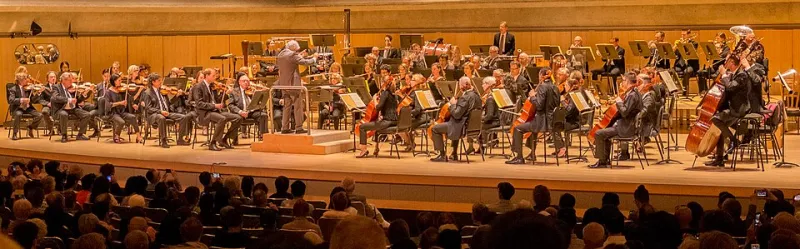
Photo: Reg Natarajan from Vancouver, Bogotá, CC BY 2.0, via Wikimedia Commons
When the first bars of Ahmed Adnan Saygun's Yunus Emre Oratorio rang out in a Manhattan concert hall last spring, several audience members reportedly checked their programs to confirm what they were hearing. The work — composed in 1946 by a member of Turkey's so-called 'Turkish Five' — had, until recently, been a near-total stranger to American institutions. Its arrival in New York, alongside a growing trickle of scores by Fazıl Say, Ulvi Cemal Erkin, and Necil Kazım Akses, raises a question that conductors and scholars are only now beginning to answer: how did an entire national school of classical music remain inaudible to the United States for three-quarters of a century?
The Five Who Rewired Turkish Sound
The 'Türk Beşleri' — Saygun, Erkin, Akses, Cemal Reşit Rey, and Hasan Ferit Alnar — emerged in the early Republican era with a distinctive mandate: synthesize Anatolian folk modes and Ottoman melodic traditions with the harmonic language of European modernism. Most studied in Paris or Vienna, they returned to a newly founded republic and built a repertoire that was neither purely Eastern nor conventionally Western, but genuinely hybrid.
Saygun proved the most consequential. His friendship with Béla Bartók, documented in the Hungarian composer's 1936 field research trip through Anatolia, placed him in direct dialogue with one of ethnomusicology's founding figures. The Yunus Emre Oratorio, setting the mystic poetry of the thirteenth-century dervish Yunus Emre, is frequently compared to works like Das Lied von der Erde in ambition — yet until the past decade, American performances were essentially nonexistent.
"It's not that the music was hiding," says one Turkish-American mezzo-soprano who has championed the oratorio in diaspora concert settings. "It was that nobody here was looking. The repertoire didn't fit the Cold War narrative of what 'East meets West' was supposed to sound like."
Why America Listened Now
Several currents converged to change that. American opera companies, under pressure to program beyond the standard Italian and German canon, have spent the last several seasons actively hunting for underperformed twentieth-century works. Festivals in Aspen, Spoleto USA, and various university-presented series have found in the Turkish Five a rare combination: substantial, rigorously crafted scores with genuine novelty value for subscription audiences.
Fazıl Say — a pianist-composer with an international profile and a flair for the dramatic — has functioned as a bridge figure. His works, including the violin concerto 1001 Nights in the Harem and the oratorio Nazım, have been performed by American orchestras and championed by soloists eager for contemporary repertoire that audiences actually respond to. Say's visibility, in turn, has prompted programmers to look backward toward the composers who built the tradition he inherited.
Diaspora musicians have done quiet, essential organizing work. Turkish-born singers trained at American conservatories have lobbied for excerpt concerts, recital programming, and chamber readings, gradually normalizing the sound world of makam-inflected modality for orchestral players raised entirely on equal temperament.
The Politics of the Program Note
Not everything about the surge is uncomplicated. Some scholars caution against framing the Turkish Five as exotic discovery — a framing that recycles the very orientalism the composers spent their careers resisting. Saygun, after all, wrote for the concert hall, not the bazaar; his idiom owes as much to French harmony and polyphony as to Anatolian folk song.
There is also the matter of access. Scores and performance materials for much of the repertoire remain difficult to obtain, held by Turkish publishers and archives with limited international distribution. A handful of American conductors have essentially built their programming around hand-copied or digitized materials, a logistical burden few institutions are willing to shoulder.
And the moment is fragile. Cultural diplomacy between Turkey and the United States has historically moved with political weather, and programming decisions made in a period of curiosity can just as easily be reversed in a period of indifference.
What the Nightingale Sounds Like
For audiences, the practical case for attending is simple: this is music of real substance that almost no one in the room has heard before. The Yunus Emre Oratorio builds from austere modal chant toward choruses of considerable sweep. Erkin's orchestral suites — particularly Köçekçe — offer rhythmic vitality that plays effortlessly in American concert halls. Alnar's kanun concerto remains one of the strangest and most delightful crossover experiments of the mid-century: a virtuoso vehicle for an Ottoman zither, scored for full symphony orchestra.
Whether the current wave becomes a permanent foothold or a passing festival fashion will depend on the usual variables — recordings, champions, and repeat performances. But the direction of travel is clear. A repertoire that spent decades as a footnote in music history surveys is now, at last, being rehearsed, programmed, and argued over in the United States. For a national school that defined itself by standing between two musical worlds, the American stage may prove the most fitting venue of all.