Bosphorus Shadows: How Hollywood Turned Istanbul Into Cinema's Favorite Exotic Peril

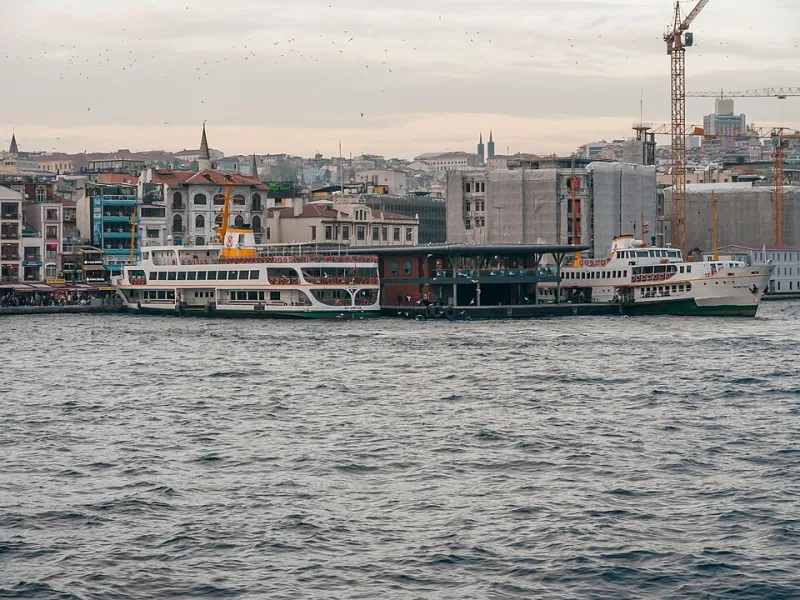
Photo: Amir Pashaei, CC BY-SA 4.0, via Wikimedia Commons
A City Written Before It Is Filmed
Few cities have been photographed by American cameras as often, and as carelessly, as Istanbul. In the Hollywood imagination, the city arrives pre-loaded: minarets against a bruised sunset, labyrinthine bazaars, smoke-filled hookah lounges where secrets change hands. Long before a single frame is shot, the screenplay has already decided what Istanbul means. It means danger, yes — but a particular kind of danger, one wrapped in silk and mystery rather than the concrete menace of an American alleyway.
This is not accidental set dressing. It is a visual grammar, refined over three-quarters of a century, and it tells us as much about American anxieties as it does about the city itself.
From Gilda's Buenos Aires to Istanbul's Grand Bazaar
The American film noir of the 1940s taught audiences that certain geographies corrupt. Casablanca, Havana, Buenos Aires — these were places where an American could lose his moral compass along with his passport. Istanbul slotted neatly into this taxonomy. The city functioned as a threshold: geographically between Europe and Asia, narratively between civilization and chaos.
By the time the James Bond franchise arrived — most famously in From Russia with Love (1963), and again decades later in Skyfall (2012) — the code was fully entrenched. Istanbul was a place where empires collide, where a Western agent could plausibly vanish. The bazaar chase, the ferry crossing, the rooftop pursuit across the old city: these set pieces repeat across decades because they require no explanation. The audience already knows the city is perilous. The film simply confirms it.
The 'Exotic Peril' Problem
What critics have come to call the exotic-peril trope rests on a simple asymmetry: the Western protagonist moves through the Eastern city, but the city never truly knows him. Istanbul in these films is backdrop, obstacle, atmosphere. Its residents are vendors, informants, unnamed crowds. The city is consumed, not inhabited.
Argo (2012) offers a revealing late example. Though set largely in Tehran, its regional visual language — the same palette of dread applied to the Eastern Mediterranean — demonstrates how interchangeable these cities remain in the American eye. The bazaar is a bazaar; the crowd is a threat. Specificity dissolves into atmosphere.
For a magazine writing from Istanbul for the world, this is more than a quibble of representation. It is a question of who gets to author a city's image — and who must live inside someone else's fiction.
The Answer From the Other Side of the Camera
Turkish cinema, however, has never merely absorbed this aesthetic; it has translated it. Directors such as Yılmaz Güny built a native hard-boiled tradition — the Yeşilçam action films of the 1960s and 70s — that borrowed noir's shadows and moral fog while grounding them in actual Istanbul neighborhoods, not bazaar stage sets. Where Hollywood saw mystery, Turkish filmmakers saw the city they navigated daily: its tenements, its ferries, its police stations, its class fractures.
In recent decades, a new generation has pushed further. Films like Erguvan and the brooding dramas of Nuri Bilge Ceylan owe something to American noir's fatalism, but their Istanbul is interior, slow, ambiguous — a city of conversations rather than chases. The menace in Ceylan's frames is not smugglers in the Grand Bazaar; it is time, memory, and the quiet violence of ordinary disappointment.
This is the counter-argument Turkish cinema makes without rhetoric: a city filmed from within cannot be reduced to a backdrop. The noir lens, pointed back at its origin, reveals that the shadow was never in the streets. It was in the eye of the beholder.
Why American Audiences Should Care
For US viewers, recognizing this grammar is a small act of media literacy with large rewards. The next time a streaming thriller cuts from a Washington briefing room to a dim Istanbul café, ask what the edit is telling you — and what it is hiding. Then seek out the films made by those who actually live in the light those shadows obscure.
Universal culture, after all, is not the erasure of difference. It is the discipline of seeing a city as its own people see it — and the willingness to let the shadow fall, occasionally, on ourselves.