Five American Books That Fell for Istanbul (and What They Got Wrong)
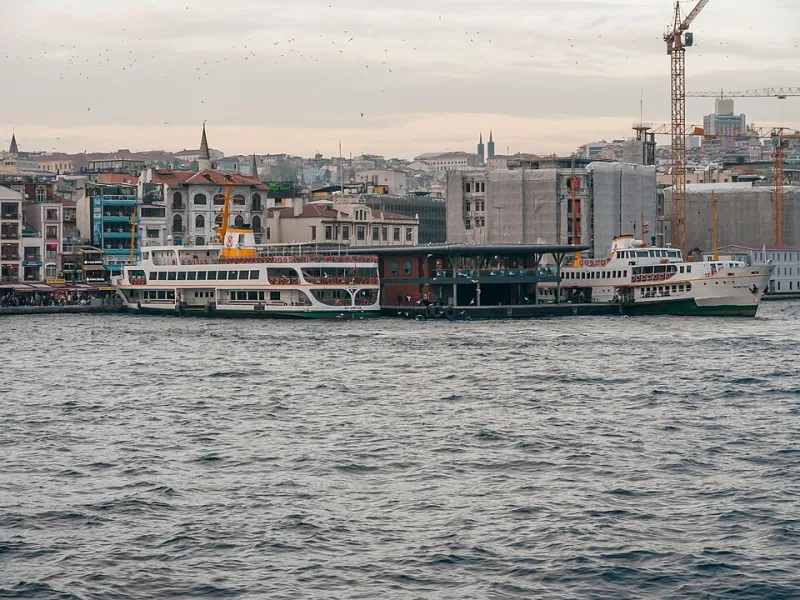
Photo: Matti Blume, CC BY-SA 4.0, via Wikimedia Commons
The View From Oklahoma, the View From the Bosphorus
Every city is a mirror, and Istanbul has been reflecting American obsessions for over a hundred years: the romance of the Orient, the anxieties of the Cold War, the ache of self-reinvention. The five books below were all written by Americans who fell, in one way or another, for this city. Read together, they form a kind of accidental biography — not of Istanbul, but of the American imagination encountering it.
A note on method: each entry considers what the book sees, what it misreads, and how it might land with a reader who actually calls the city home.
1. The Black Book Effect — Patricia Cornwell's Portrait of a Killer Interviews
Strictly speaking, crime writer Patricia Cornwell's Istanbul connection is tangential, but the interview-driven travel narratives she inspired — the American true-crime lens turned on the city — reveal something essential. American genre writers treat Istanbul as a puzzle box: layered, secretive, best approached forensically. The misreading is structural. Istanbul is not hiding anything; it is simply older than the questions Americans ask of it. A local reader smiles at the assumption that mystery implies concealment. Sometimes a city is just a city, with laundry to hang and buses to catch.
2. John Freely's Strolling Through Istanbul
The late Freely, an American physicist turned chronicler, co-wrote the definitive walking guide to the city in 1972, and it remains the most affectionate American text about Istanbul ever produced. Freely knew the Byzantine cisterns and Ottoman tombs better than most natives. His blind spot: a certain nostalgia that freezes the city in its monuments, passing over the apartment blocks, the traffic, the everyday slog. Read him for depth of knowledge; read Orhan Pamuk alongside him for the melancholy of the living streets Freely sometimes skipped.
3. Orhan Pamuk Through American Eyes — Maureen Freely's Translations
Technically translations, but the American-born Freely's rendering of Snow, My Name Is Red, and Istanbul shaped how an entire generation of US readers encountered the city. Her work raises a genuine question: where does Pamuk end and his translator begin? For American book clubs, Snow reads as political thriller; for Turkish readers, it is a more intimate argument about secularism and heartbreak. Both readings are legitimate. Neither is complete.
4. Charles King's Midnight at the Pera Palace
King, an American historian, reconstructs the city's interwar moment — White Russian refugees, jazz clubs, spies, and the birth of modern Turkey — through the biography of a single hotel. It is dazzling narrative history, and it corrects a long-standing American tendency to see Istanbul as timeless rather than modern. Its limitation: the book's Istanbul ends around 1950, as though the city stopped being interesting once it stopped being picturesque to Westerners.
5. Elif Shafak's American Readership and The Bastard of Istanbul
Shafak writes in English for a global audience, and her novel became a US bestseller precisely because it translates Turkish family dysfunction into a register American readers recognize — secrets, sisters, food, memory. Yet the book's reception in Turkey, including a trial over its Armenian references, reminds us that a novel can be a comfort read in Chicago and a contested document in Kadıköy. Same pages, different stakes.
How to Read a City You Don't Live In
The lesson these five books offer is not that Americans should stop writing about Istanbul — the cross-pollination is genuine and often beautiful. It is that every outsider's portrait is also a self-portrait. Freely's Istanbul is a ruin worth knowing; King's is a modern crossroads; the crime writers' is a locked room.
The healthiest reading practice, for American audiences, is a double exposure: enjoy the book, then ask what the city would say in its own defense. Better still, read the Turkish writers back — Pamuk, Latife Tekin, Barış Bıçakçı — and let Istanbul, for once, describe itself.