The Hodja on the Library Shelf: Turkish Folklore's Slow Arrival in American Children's Books
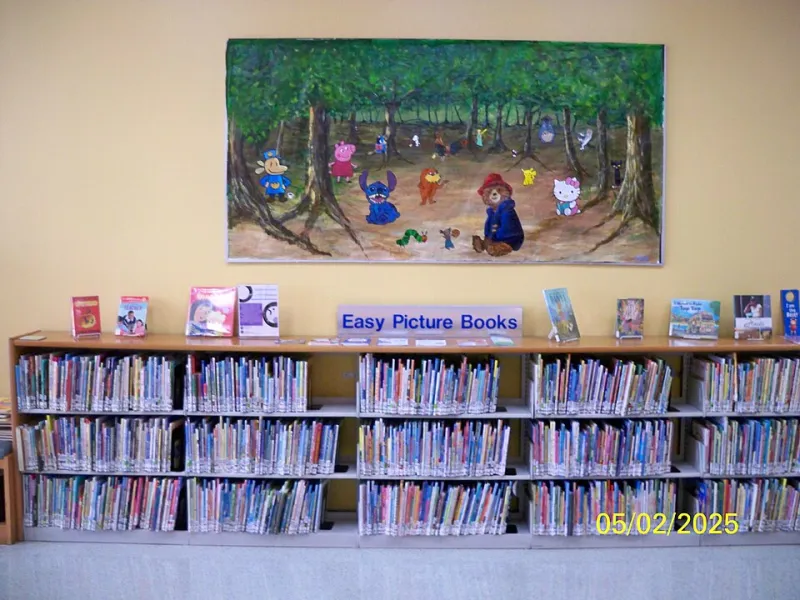
Photo: EmerioJoelMendez, CC BY 4.0, via Wikimedia Commons
In the children's room of a public library in Madison, Wisconsin, a borrowed donkey is having a moment. The animal belongs to Nasreddin Hodja, the thirteenth-century sage whose absurdist logic — planting spoons in a field, riding his donkey backward — has entertained Turkish children for centuries. Now he is being discovered by American seven-year-olds, one picture book at a time.
It is a quiet migration, easy to miss amid the more visible currents of Turkish culture reaching the United States. But in the past decade, folklore from Anatolia has moved steadily into American children's publishing: retellings of Hodja anecdotes, picture-book versions of Anatolian legends, and folk tales collected from villages that, in most American imaginations, do not yet exist.
What Survives the Crossing
Translating a folk tale for an American picture-book audience involves a series of small negotiations. Several translators working in the field describe a familiar pattern: the Hodja's sharper edges — his mockery of greed, his occasional blasphemy, the tale in which he lowers a rope into the well and asks for a drink — tend to survive. What gets softened is context.
Village life in Anatolia, with its courtyard economies and communal ovens, is often flattened into generic "a long time ago in a faraway land." The result, some argue, is a Hodja without a homeland: funny anywhere, rooted nowhere. Others defend the approach as the price of admission. A picture book that requires a footnote on Ottoman-era taxation will not be checked out twice.
The illustrations are where the negotiations become visible. The best recent titles get the texture of Anatolian village life right — the flatbread turning on a convex griddle, the kilim patterns on floor cushions, the particular geometry of stone houses in Cappadocia. The worst simply relocate the story to a desert of Western imagining, all minarets and camels, as if Anatolia were an extension of a Hollywood backlot. Children notice. Librarians notice more.
The Librarians as Gatekeepers
If Turkish folklore has a foothold in American childhood, it owes less to publishing houses than to a network of librarians with a mission. The push for what the field calls "windows and mirrors" — books that let children see other lives and see their own — has made multicultural folk-tale collections a fixture of collection development. A librarian in Portland or Atlanta does not need to speak Turkish to recognize a well-told trickster tale; the Hodja sits comfortably in a tradition that includes Anansi, Coyote, and Br'er Rabbit.
That recognition is the books' greatest asset and their limiting condition. The Hodja who gets shelved is the universal trickster, stripped of the Sufi undertones — the mystical humility, the jokes that double as spiritual instruction — that Turkish readers take for granted. In Turkey, the Hodja is part fool, part philosopher, part folk saint. In Peoria, he is mostly funny. Something is gained in portability; something is lost in depth.
A Shelf Still Half Empty
For all the recent momentum, the catalogue remains thin. The great repositories of Anatolian folklore — the tales collected by folklorists like Pertev Naili Boratav, the regional legends of the Black Sea and the Euphrates valleys — remain largely untranslated for children. What reaches American shelves is a handful of Hodja retellings, a scattering of origin myths, and the occasional ambitious adaptation of the Shahmaran legend, the serpent-woman of the south whose story resists easy softening.
Whether the trend deepens or stalls will depend less on taste than on economics. Picture books are expensive to produce, and folklore with no built-in American audience is a hard sell to marketing departments. The librarians, for now, are doing the work of ambassadors — reading the Hodja aloud at story time, fielding questions about donkeys and spoons, and quietly building a constituency.
There is a certain Hodja-like irony in all of it: stories that survived seven centuries of oral transmission, empires, and republics now depend on the circulation desk of a suburban library. But the Hodja would likely approve. His wisdom was always that the smallest vessel — a donkey, a spoon, a well — could carry the largest joke. American picture books, it turns out, are simply the newest vessel on the route from Anatolia to everywhere.