Ink Across the Water: Why American Comics Editors Are Falling for Istanbul's Graphic Sensibility
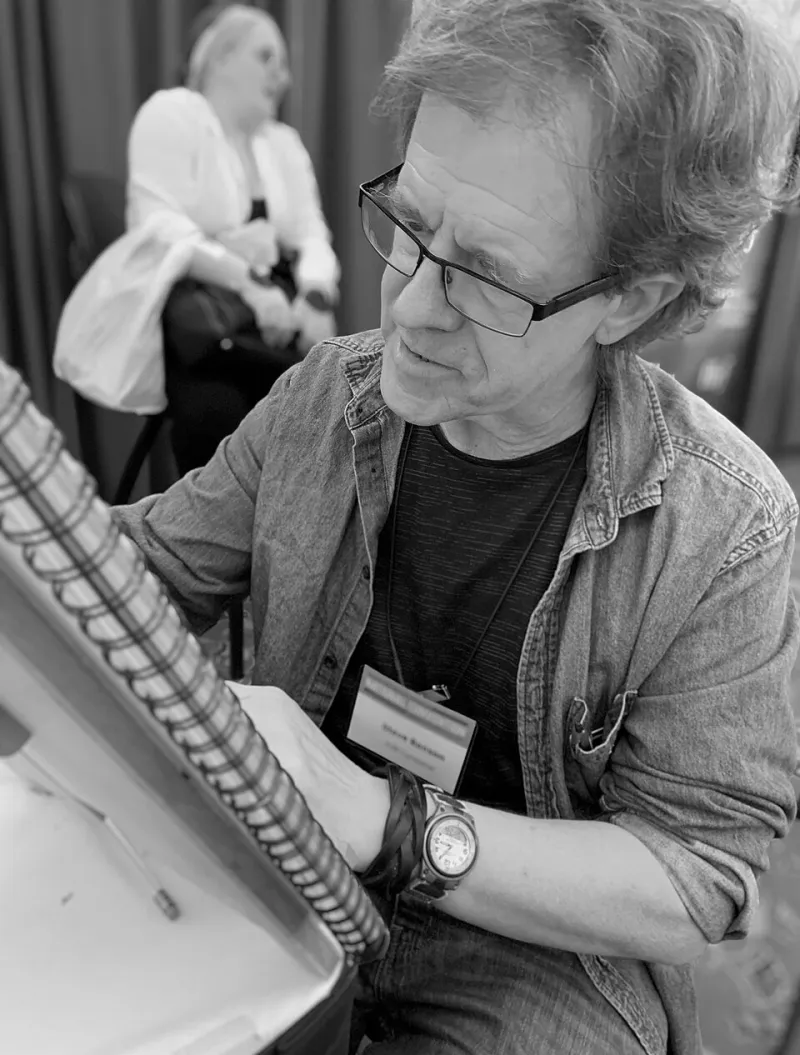
Photo: Chitrapa, CC BY-SA 4.0, via Wikimedia Commons
Walk into any American independent bookstore — Powell's, The Strand, Chicago's Women & Children First — and the graphic novel section has outgrown its corner. Industry trackers consistently rank comics and graphic novels among the fastest-growing categories in publishing, a format that has shed its pulp reputation and now sits comfortably beside literary fiction. Into this expanding shelf space, an unexpected voice is arriving: the Turkish cartoonist.
It is a quieter migration than the one that carried Turkish fiction to American readers in the wake of Orhan Pamuk's Nobel, but for those paying attention, it may prove just as consequential.
A Century of Satire, Looking for a New Audience
Turkey has never lacked for cartoonists. The country's satirical press — from the razor-edged Gırgır of the 1970s, once among Europe's bestselling humor magazines, to the long-running Leman and its successors — cultivated a visual wit that could survive censorship, coups, and courtroom summons. Cartoonists in Istanbul have long worked under conditions American illustrators can scarcely imagine: prosecution for a single panel, newspapers shuttered overnight, artists working under pseudonyms to protect their families.
That pressure produced a distinctive graphic sensibility. Dense, expressive linework; humor that walks hand in hand with grief; a comfort with absurdity that reads, to American eyes, as a cousin of Kafka rather than of Mad magazine. It is precisely this sensibility that a new wave of US-based editors — at houses like Drawn & Quarterly's American peers, Fantagraphics, and the literary imprints now commissioning graphic nonfiction — has begun to seek out.
"We were looking for voices that didn't sound like Brooklyn," one New York-based comics editor, speaking on condition of anonymity about ongoing acquisitions, told Evrensel Kültür. "Istanbul delivers a register of political melancholy that American cartooning, for all its strengths, rarely attempts."
The Translators of the Visual Joke
Translating a Turkish graphic novel involves a paradox the prose world never faces: the words must be rewritten without disturbing the drawing. Lettering must fit balloons drawn years earlier. Wordplay embedded in a panel — a pun on an Istanbul place name, a bureaucratic euphemism rendered in a bureaucrat's scrawl — must be conjured anew in English without betraying the ink.
The people doing this work form a small, dedicated guild: bilingual writers, many based in New York or London, who treat the translated comic less as a conversion than as a re-inking. Their craft has become the invisible hinge of the entire boom. When it succeeds, American readers never sense the seam. When it fails, the joke dies silently inside its balloon.
Residencies have accelerated the exchange. American and European artist residencies have increasingly welcomed Turkish illustrators, several of whom have used the space to develop long-form work aimed explicitly at international readers — memoirs of military service, graphic reportage from Gezi-era protests, absurdist family sagas set in apartments where three generations negotiate one bathroom and a hundred years of history.
What American Readers Are Finding
The works reaching US shelves share an unwillingness to separate the political from the personal. Where American graphic memoir often arcs toward redemption, the Turkish import tends to circle — returning to the same street corner, the same unspeakable year, the same joke told with slightly worsening punchlines. Readers raised on Art Spiegelman, Alison Bechdel, and Marjane Satrapi will recognize the grammar; the accent is entirely its own.
A Starter Shelf: Five Turkish Graphic Works in English
For readers curious where to begin, the following works — available in English translation — offer an entry into the breadth of Turkish cartooning:
- "Dungeon: Zenith" connections aside, start with the satirical anthologies — English-language collections of contemporary Turkish political cartooning, frequently published by small presses and university imprints, offer the fastest immersion in the tradition's bite.
- Graphic reportage from the Gezi protests — several Turkish cartoonists documented the 2013 demonstrations in real time; translated editions circulate through independent comics distributors.
- Erdil Yaşaroğlu's wordless visual humor — pantomime gags that cross the language border entirely unaccompanied.
- The Leman-school political satire collections — serialized panels that read as a decades-long diary of Turkish political life.
- New-generation graphic memoirs — long-form autobiographical work by younger cartoonists, increasingly acquired by American literary publishers, often debuting at festivals like MoCCA or Small Press Expo.
(A note for collectors: small print runs mean some of these titles surface first at comics festivals and independent shops rather than major chains — part of the pleasure of the hunt.)
The Long Game
No one in the industry predicts a Turkish comics wave on the scale of the Korean webtoon boom or the Japanese manga juggernaut. The print runs are modest; the marketing budgets smaller still. But literary culture in America has rarely been built by blockbusters alone. It is built by the slow accumulation of voices that change what readers expect a page to do.
Istanbul's cartoonists have spent a century drawing under conditions designed to make them stop. That they kept drawing is the story. That American readers are finally getting to see the work — panel by translated panel — is the newer, better one.